The floor is yours!
The YCM1 will emphasize the multidisciplinarity of crystallography by mixing the different biological, chemical, physical and heritage science themes in sessions gathering all participants. Speakers will therefore be invited to make an effort to make their work broadly accessible, a very interesting and formative exercise, in order to be understood by non-specialists, while illustrating the contribution of crystallography in their research work. The major part of the meeting will be dedicated to oral and poster presentations from submitted abstracts in order to offer each participant the opportunity to valorize her/his research in an international context
More than 30 slots are available in the program for oral presentations and posters will be displayed next to the seminar room during the whole meeting.
Do not refrain from submitting your abstract! https://www.ycm1.xyz/abstract-submission/
Confirmed invited speakers
Prof. Jean-Pierre Sauvage
Nobel Prize in Chemistry 2016
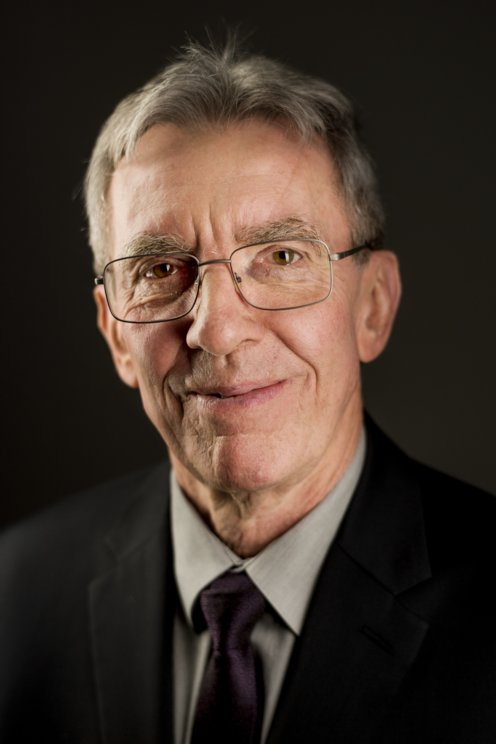
© Nobel Media AB. A. Mahmoud
Jean-Pierre Sauvage is Emeritus Professor at the University of Strasbourg and obtained the Nobel prize in Chemistry in 2016 for his work on molecular machines.
In a conference entiltled « Molecular Machines and Motors: A Historical Perspective« he will talk about various fields related to molecular sciences such as coordination photochemistry and solar energy conversion, CO2 electrocatalytic reduction, chemical topology (interlocking or knotted rings), light-induced charge separation, multifunctional porphyrins as models of the photosynthetic reaction centre as well as molecular machine prototypes. His group got interested in this new field more or less by accident, which demonstrates that jumping in a new field can be very beneficial. The merit of his group goes to a large extent to the young and less young researchers he has been working with.
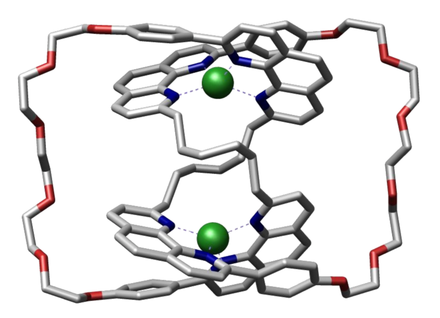
Knotane – Source Wikipedia
Dr. Laure Delarbre
Head Lab of the Integrated Drug Discovery service, Sanofi R&D France
Crystallographers in the pharma world of drug discovery
Sanofi is a world-leading pharmaceutical company, committed to providing drugs to patients in a wide array of therapeutic areas, such as vaccines, oncology, immune inflammation, neurologic and metabolic diseases. Its research teams bring together scientists with a wide variety of backgrounds, from cell biologists and veterinaries to artificial intelligence specialists, including crystallographers. We will describe the main steps of drug research and development, the daily work of multidisciplinary project teams and how the role and missions of small-molecule crystallographers and macromolecule crystallographers concur to the objectives of a pharmaceutical company. Finally, we will provide examples of crystallography impact on drug research projects.

Dr. Romain Wernert
Postdoctoral research associate, University of Oxford, Solid State Chemistry
The challenging crystallography of mixed-anion inorganic compounds
Solid state compounds form the basis of modern technologies and are very often based on transition metal oxides. The combination of multiple anions in a single compound is challenging due to the strong thermodynamic preference of the cation(s) towards only one of them. However, progress have been made in the synthesis of such compounds using soft topochemical reactions for example. While some of these mixed anion compounds are relatively easy to characterize due to a large difference in their ionic radii and their X-ray scattering factor, it is not the case of oxyfluorides. To precisely characterize the anion arrangement or absence of thereof, a multi-technique approach combining spectroscopies with conventional diffraction techniques is necessary. This will be illustrated though the example of KxVPO4F1‑yOy battery materials whose crystal structure at various O/F substitution rate and K+ deintercalation rate could only be understood with the help of EXAFS, 31P NMR spectroscopy and DFT calculations along with powder X-ray diffraction.
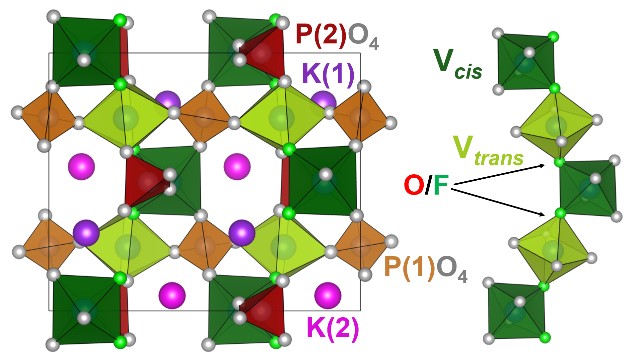
Crystal structure of KVPO4F, built from corrugated chains of VO4F2 octahedra with alternating cis and trans fluorine arrangement. In KVPO4F0.5O0.5, F and O are statistically distributed on the green site.
Dr. Helen Ginn
Helmholtz Young Investigator Group Leader, Hambourg, Germany
Teasing out the secrets of subtle protein dynamics.
Structural biology experiments are focusing increasingly with the small, subtle motions underpinning protein function. Our collective understanding of how these subtle motions translate to functional impact is limited, and this is hampering efforts in protein engineering and drug development. The Protein Machinists’ lab develops conceptual frameworks for defining, modelling and navigating the protein’s conformational space, focusing on the representation of protein entities (RoPE). The first tool of RoPE is a simple and powerful visualisation of conformational space from experimental data. This talk will illustrate with examples how these tools help find the narrative in modern multi-dataset experiments and drive hypothesis development.
AFC 2022 thesis award winners
Dr. Daruisz Czernecki
Biology award
Dr. Laure Paradis-Fortin
Chemistry award
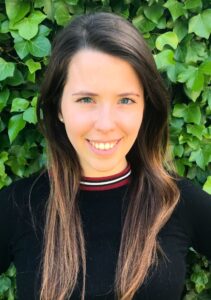
Dr. Corentin Chatelier
Physics award